
Why We Care So Much About Teen Reading
Why books?
We’ve all read the statistics: in 2022, just 31% of 8th graders were able to read and comprehend challenging texts.* These kinds of sound bites are designed to alarm, but the truth is, they’re not new. Few teens, and possibly even fewer adults, ever regularly turned to books as a readily accessible source of meaning and pleasure.
Today we’re saturated with digital stimulation at every turn. Our devices provide information, entertainment, and the promise of belonging. And yet, there’s never been greater potential for reading to have its moment.
Books offer something rare: the chance to focus deeply, enter another person’s experience, wrestle with complex ideas, and make meaning for ourselves. Teens are ready for that. But first, reading has to become something they can do successfully—and something worth choosing.
Teens can’t enjoy reading if they don’t understand what they read.
By middle and high school, students encounter increasingly complex texts across every subject. When reading repeatedly leads to confusion instead of understanding, it’s easy to disengage—most decide that reading simply isn’t for them.
It’s hard to enjoy reading when you rarely experience success at it.
It’s not too late. When we give teens concrete ways to build meaning from challenging texts—and when they begin to experience those wins themselves—their relationship with reading changes.
▶️ Hear how Priscilla uses Zinc to transform reading outcomes in her 9th grade ELA classes.

Reading demands effort. That’s its power.
Let’s be honest. Reading will never compete with screens for ease.
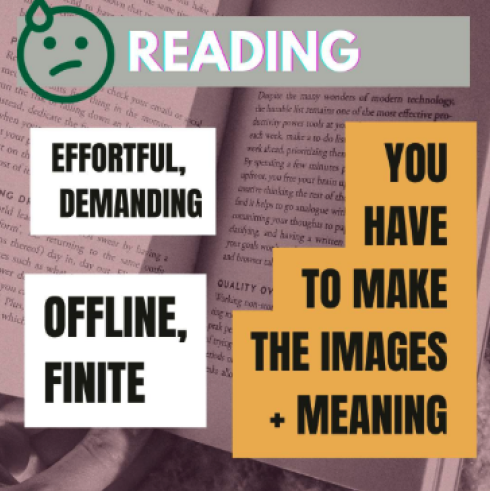
Reading asks a lot of us. We have to use our own effort to turn words on the page into images, ideas, and meaning.
We have to hold multiple ideas at once, make connections, and keep going when it doesn’t come easily.
This is also what makes reading deeply satisfying. It offers something that endless scrolling never can.
Reading gives us access to new ideas and experiences, entertains us, and helps us de-stress. (Scrolling claims to do that too—but with a catch: brain rot!)
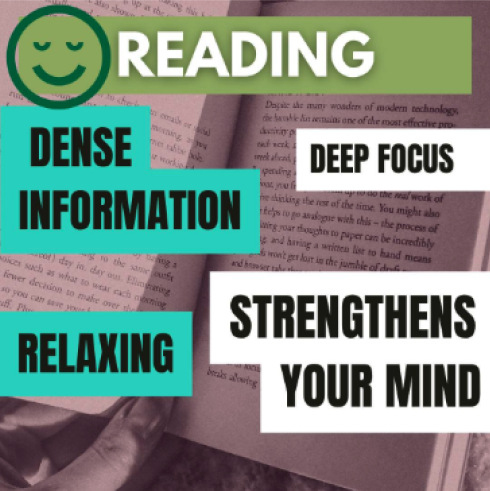
Unlike scrolling, reading strengthens our ability to think deeply, and offers the satisfaction of making meaning for ourselves.
Teens are ready. In a world of constant stimulation and shallow rewards, they’re hungry for meaning, connection, creativity—and experiences that hold their attention in a different way.
Reading can offer all of that—and the pride that comes from engaging deeply with something they chose for themselves.
Want to dig into the research? Explore Zinc’s Science of Reading white paper. →

What Really Motivates Teens
In his recent bestseller, 10-25: The Science of Motivating Young People, David Yeager, researcher at the University of Texas, argues that adolescents are especially attuned to status, respect, belonging, and autonomy. This has huge implications for teens and reading.
If we want teens to choose the effort reading demands, the experience has to offer something they value.
Status and respect
When students grow as readers, they experience the pride of genuine competence: I understand this. I can do this.

Social connection
Reading gives students ideas and experiences worth thinking about, talking about, and sharing.
Autonomy and authority
Meaningful choices about what to read give students ownership of the experience.
Purpose and pride
Effort becomes worthwhile when students are exposed to interesting, high-level texts that reward the work of comprehension.

The bottom line for teens?
The goal isn’t to convince teens that they should care about reading. It’s to create the conditions for them to discover it for themselves.

See what this looks like in real classrooms.
From first engagement to real growth, see how one teacher is using Zinc.
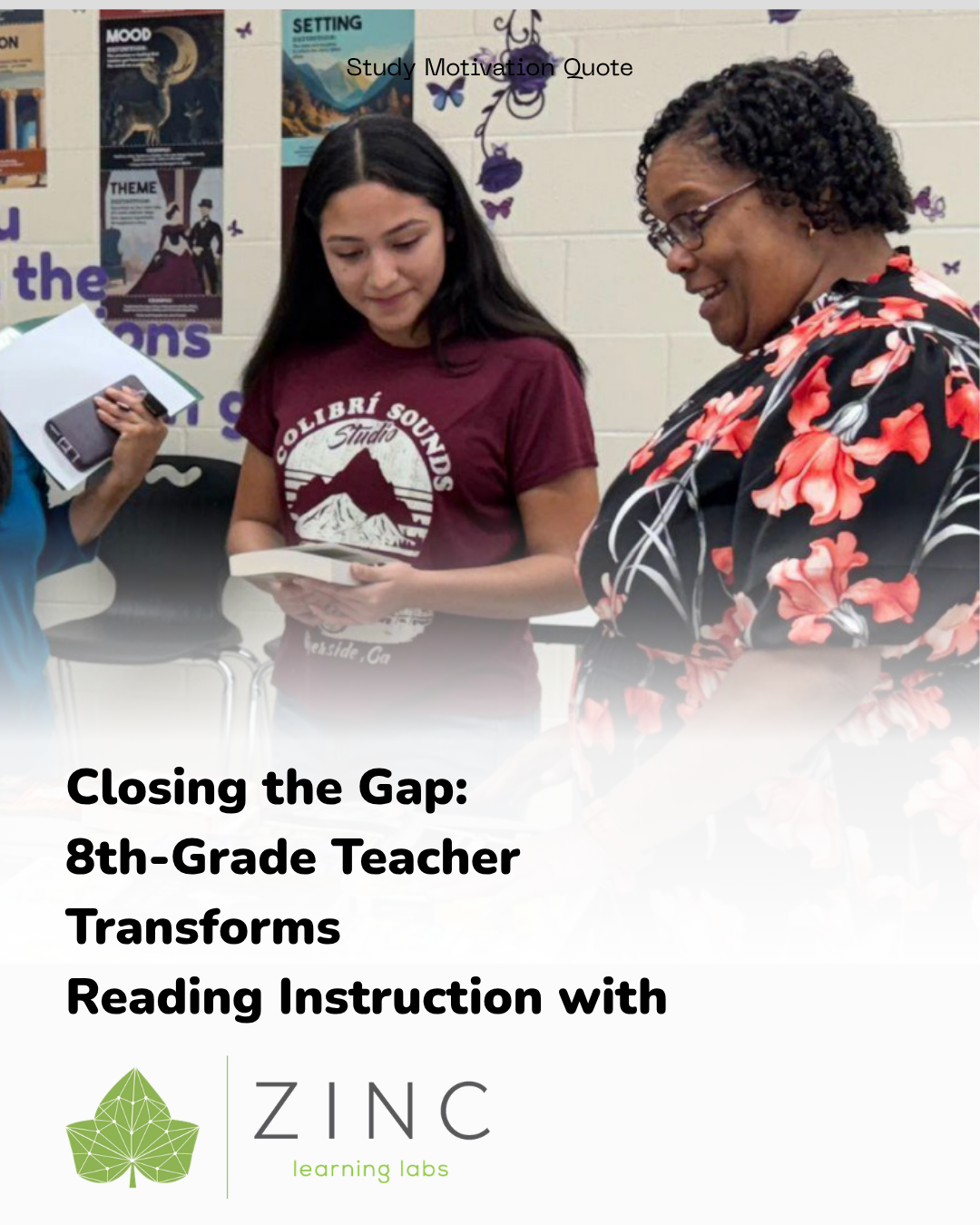
At a rural Title I middle school, one 8th-grade teacher faced a familiar reality: students with gaps in vocabulary, comprehension, and reading stamina.
She used Zinc to build simple, consistent routines—short work blocks, clear expectations, and time to talk through misreads. Over time, students learned to slow down, pay attention, and stay with the text.
Within weeks, most students were improving—and starting to talk about what they read.
Help More Teens Experience Reading Success
Zinc helps students become capable, confident readers—capable of discovering the meaning, connection, and satisfaction reading offers.
What are your reading growth goals? Find out how Zinc can help you get there.