
The State of Teen Reading 2026
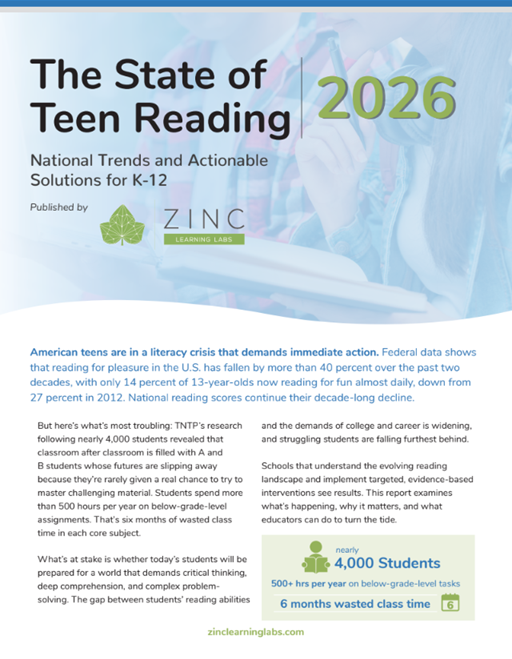
National Trends and Actionable Solutions for Secondary Literacy
American teens are facing a literacy crisis and secondary schools are on the front lines.
Reading for pleasure has declined by more than 40 percent over the past 20 years. National reading scores continue to fall. Too many students are spending their days working below grade level instead of building the skills they need for college, career, and civic life. What’s more, too few teens are taught how to actually apply effort in reading—or shown that doing so develops the agency, confidence, and credibility that adolescents crave.
The State of Teen Reading 2026, published by Zinc Learning Labs, examines what’s driving these trends and what educators can do differently to reverse them.

A Growing Crisis in Adolescent Literacy
Teen reading outcomes are declining at a time when reading demands are increasing. Fewer teens read for enjoyment, and more struggle to comprehend complex academic texts across subjects.
At the same time, secondary literacy instruction has not evolved to meet adolescent needs. While early literacy receives significant attention, many middle and high school educators report limited training, time, or tools to support older struggling readers.
The result: Students advance through grades without the fluency, vocabulary, comprehension strategies, or stamina required for college and career readiness.
The State of Teen Reading 2026 identifies four major instructional gaps holding students back:
Decoding and Fluency
Vocabulary Knowledge
Comprehension Strategies
Motivation and Stamina
At the same time, the report highlights that teens read more than ever—on screens, in games, and on social platforms. It’s time to stop competing with those platforms for attention. When we try to “entertain” teens, we lose. When we teach them how to apply meaningful effort and experience real success with challenging texts, we—and more importantly, they—win.

Only 14% of teens read for fun almost daily
Action Steps for Educators
The report outlines research-backed actions schools can take now to strengthen instruction, increase access to grade-level texts, and build stamina across content areas.
It also addresses what often goes unsaid:
Motivation is not separate from instruction.
Students need honest conversations about effort.
Reading will always demand more focus than passive media, but effort is teachable.
When students understand how to use it, and when they experience progress, engagement follows.
Dive into the data and strategies shaping secondary literacy in The State of Teen Reading 2026.

Accelerate reading growth in your classroom or district. Talk with a Zinc Specialist